🍂 Brand Anniversary SALE: FREE Shipping + 30% OFF! 🍂
🧦I Tested These Socks As A Doctor—First At Work, Then At Home
Doctor-Observed Relief For Daily Foot Pressure
Why I became curious about a sock with a built-in cushioning layer—after years of seeing patients rely on shoes and insoles alone
By Dr. Elaine Morris, 61
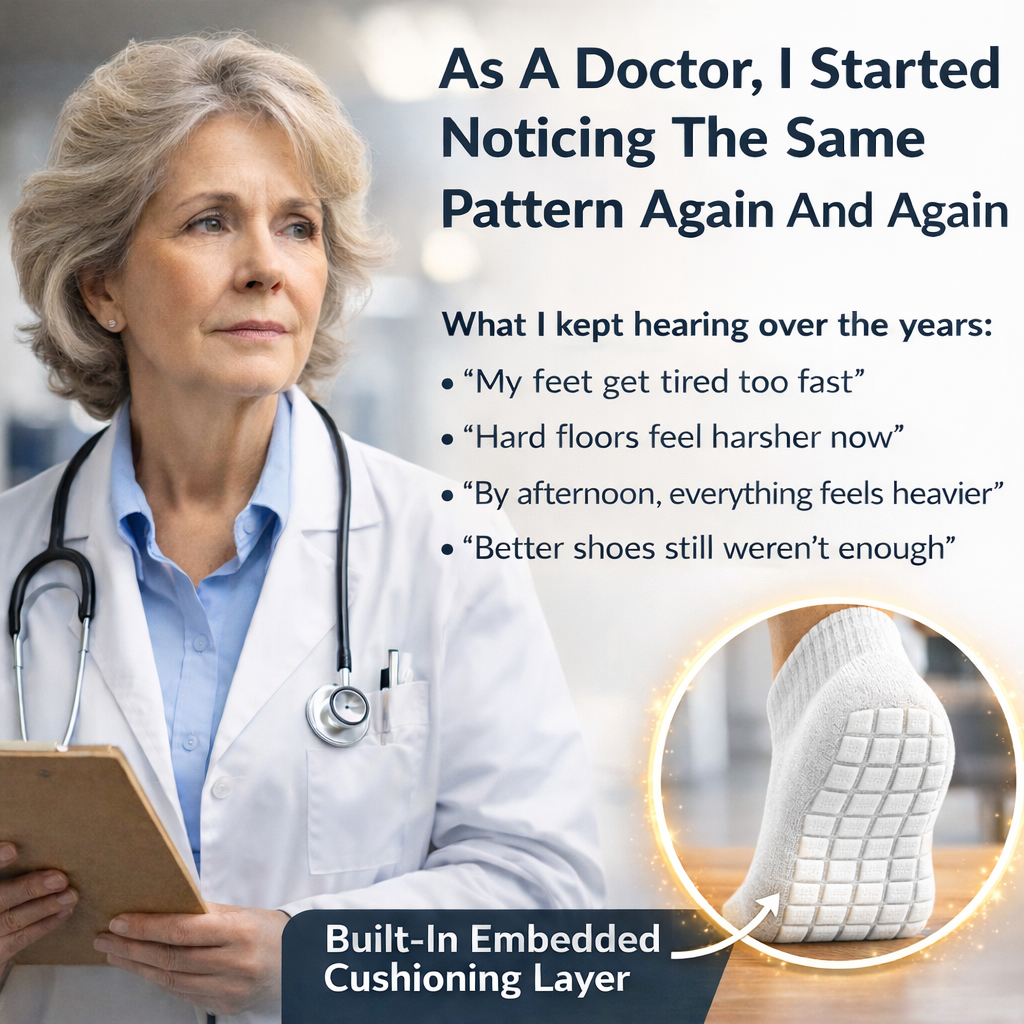
I’ve spent decades around people who stand for long hours.
Nurses. Teachers. Retail workers. Parents. Grandmothers. Women who are constantly moving from room to room at home. Men and women who are not necessarily “injured,” but still say the same thing in different ways:
“My feet get tired too fast.”
“Hard floors feel harsher than they used to.”
“By late afternoon, everything feels heavier.”
“I’ve tried better shoes, but it still catches up with me.”
That pattern always interested me.
Because in many cases, the problem did not start as some dramatic medical event.
It started as something quieter.
A feeling that the floor suddenly felt less forgiving.
A feeling that certain shoes no longer felt like enough.
A feeling that even at home—in slippers, on kitchen tile, on hardwood, walking from one room to another—the feet seemed to lose their tolerance for impact.
And that is exactly why I decided to personally test a product I normally would have ignored:
A pair of shock absorbing socks with a built-in, embedded cushioning layer integrated directly into the sole of the sock.
At first glance, that may sound simple.
But the mechanism is very different from what most people assume they need.
What Made Me Curious?
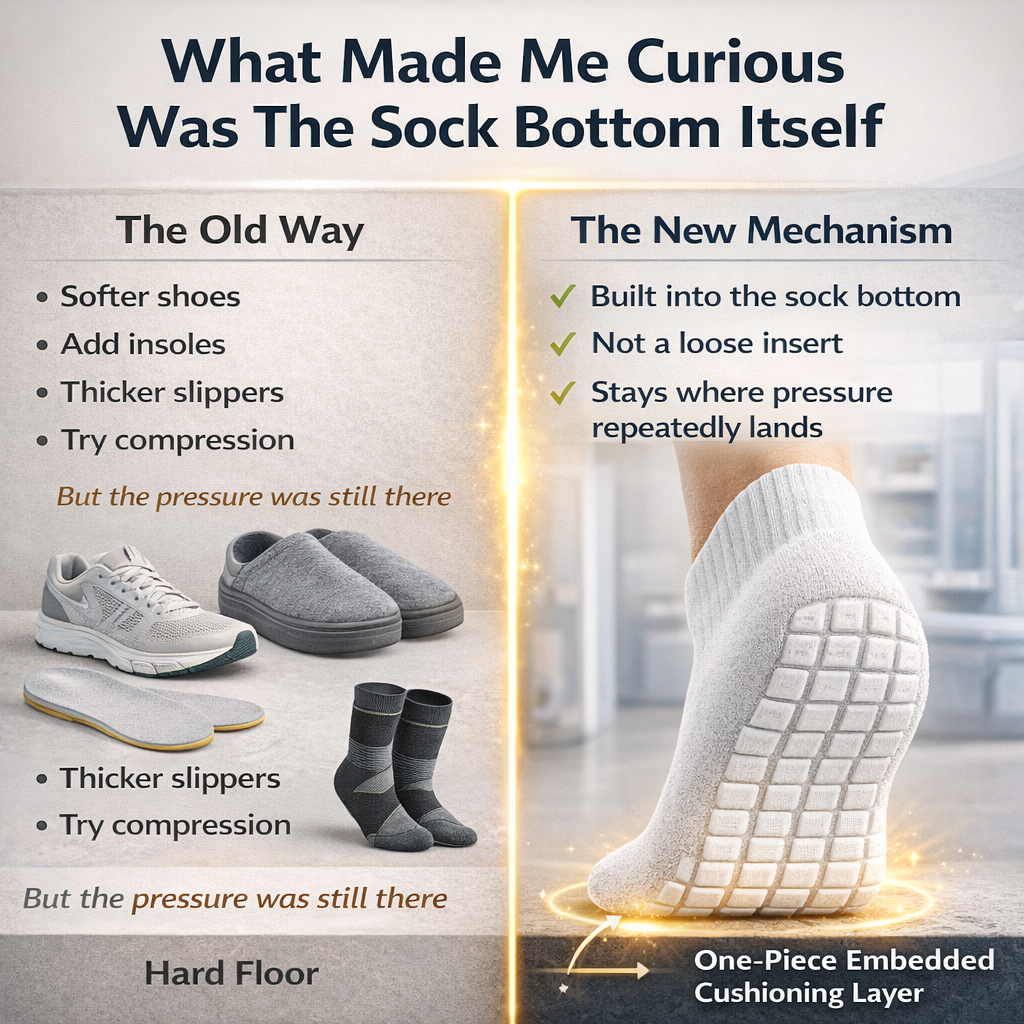
Most people are taught to think about foot comfort the old way:
Get softer shoes
Add insoles
Buy thicker slippers
Try compression
Rotate footwear and hope something works
But in real life, many people still feel the same familiar problem:
The pressure is still there.
That is because shoes and insoles often address the problem outside the foot, not at the exact point where the foot meets the ground, step after step.
That distinction matters more than most people realize.
What caught my attention about PEWOX Shock Absorbing Socks was the construction of the sock bottom itself.
Instead of relying only on the shoe to absorb impact, the sock uses a one-piece, embedded cushioning structure built directly into the sole area.
Not a loose insert.
Not a separate pad.
Not something sliding around under the foot.
It is integrated into the sock bottom, so the cushioning stays exactly where foot pressure repeatedly lands.
That means the foot is not just sitting on a shoe.
It is interacting with a cushioned layer before the hard floor force fully travels upward.
As a doctor, that was the first part that made mechanical sense to me.
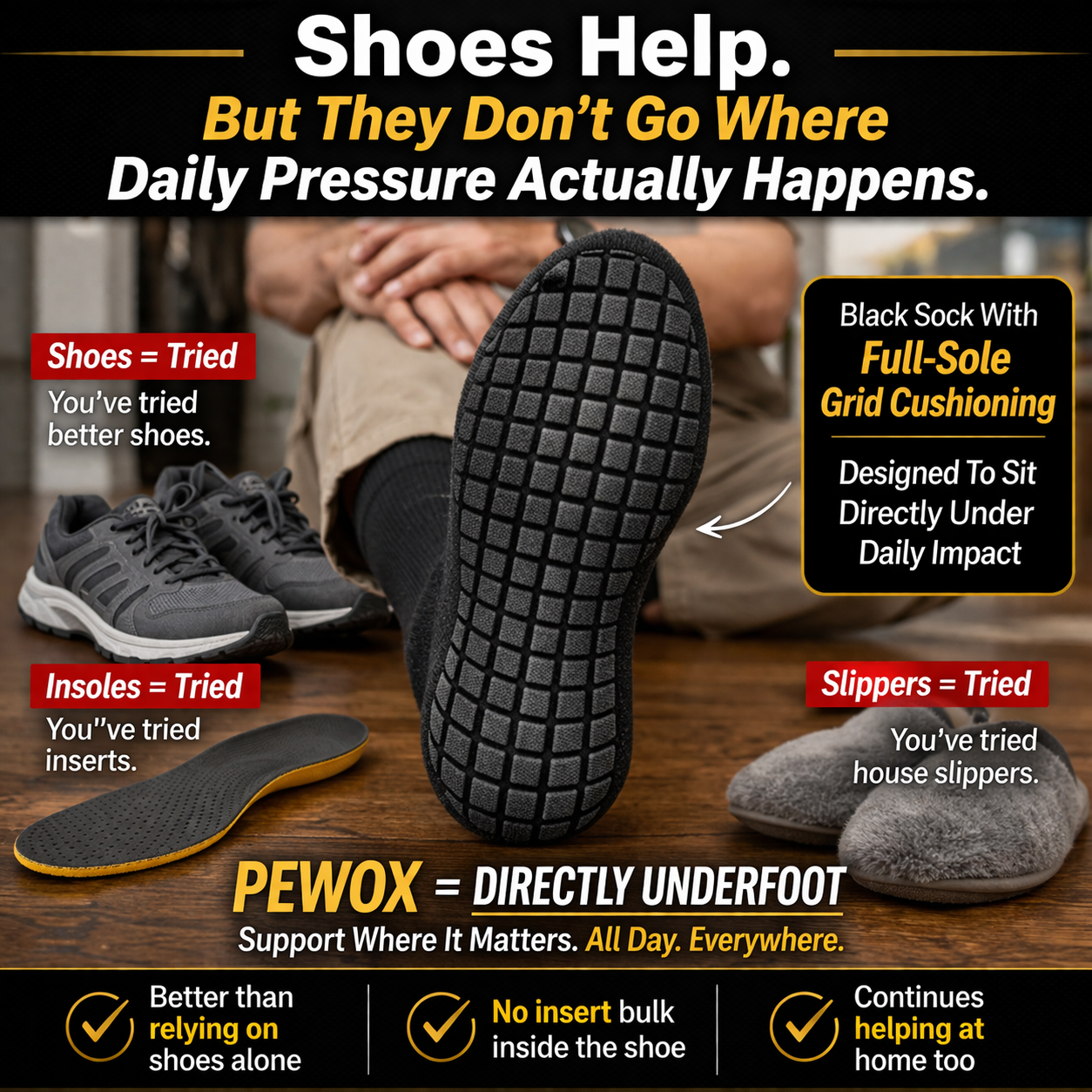
Why Shoes Alone Often Don’t Fully Solve It
Over the years, I’ve seen many people spend more and more money on shoes, believing the next pair will finally fix the issue.
Sometimes better footwear helps.
But shoes have limitations.
A shoe can be supportive, yes.
A shoe can have foam, yes.
A shoe can feel good for a while, yes.
But once you spend enough hours on hard surfaces—clinic floors, kitchen tile, concrete, hardwood, supermarket aisles, garage floors, hallways at home—that comfort often fades.
Why?
Because the foot is still taking repetitive loading from below.
And standard shoes do not always keep the exact underfoot cushioning positioned precisely where the foot needs it during every phase of daily use.
That is where insoles are usually introduced.
But insoles have their own issues:
They can shift
They can flatten
They can change how the shoe fits
They can make some shoes feel tighter
They are still dependent on the shoe, not integrated with the sock itself
They are removed when the shoes come off, which means the benefit ends there
That last point matters more than people think.
Because many people do not feel the most foot fatigue only at work.
They feel it after work, too.
When they get home.
When they walk in the kitchen.
When they go upstairs.
When they stand at the sink.
When they tidy the house in slippers or barefoot.
So I wanted to test something that could function in both worlds.
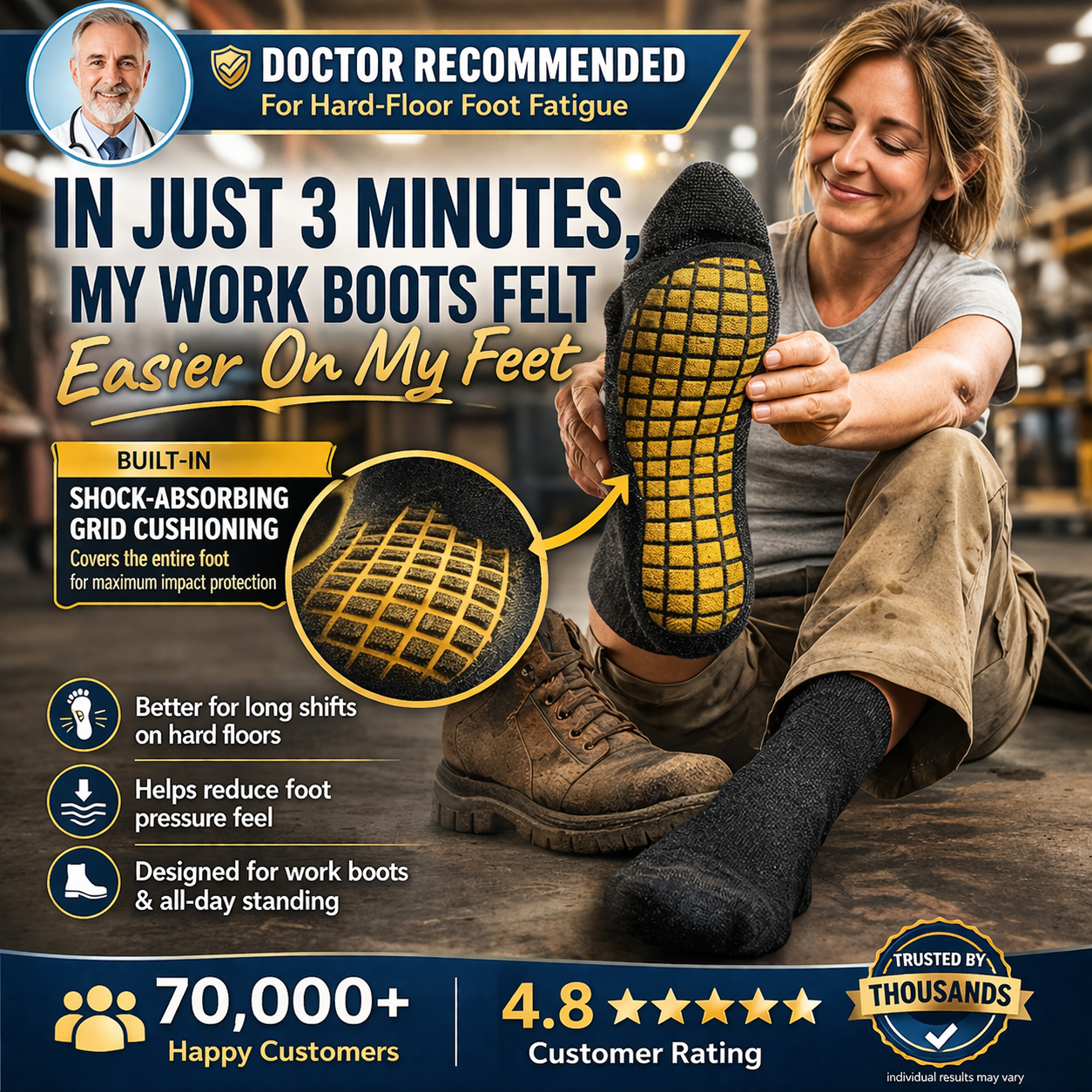
My First Test: Wearing Them During Work
I decided to wear the socks during a long workday.
No dramatic conditions. No laboratory setup. Just real use.
I wore them inside my regular work shoes and paid attention to the only thing that mattered:
How my feet felt as the hours went on.
What I noticed first was not “magic.”
It was something more believable.
The floor felt less sharp underfoot.
The pressure felt less direct.
The bottom of the foot felt like it had a more forgiving interface between itself and the hard surface below.
That matters because in daily life, relief often does not begin as a huge transformation.
It begins as less irritation per step.
Then less accumulation.
Then less end-of-day heaviness.
By midday, I noticed something else.
Usually, when standing and walking for extended periods, there is a point where the feet begin to feel “used up,” as if the floor has been quietly draining them all day.
That feeling was noticeably reduced.
Not erased. Reduced.
And that is exactly the kind of improvement I pay attention to, because it is credible.
By the end of the day, my feet felt less beaten down than I expected.
The key difference was not simply softness.
It felt more like the sock bottom was helping buffer repetitive contact stress before it built into that familiar late-day foot fatigue.
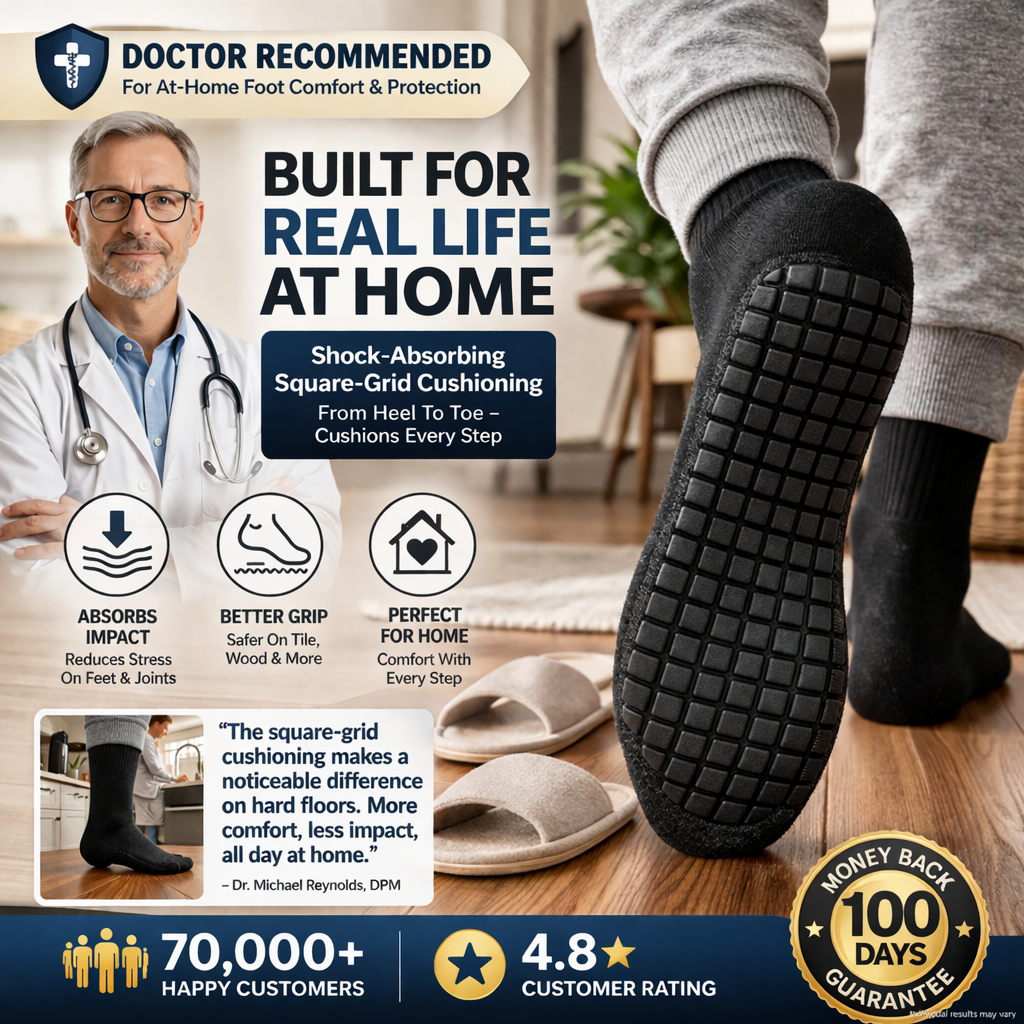
My Second Test: Wearing Them At Home
The second part of my test mattered even more to me.
Because many products feel acceptable in shoes, but their benefit disappears the moment you get home and take those shoes off.
So I kept wearing the socks at home.
Around the kitchen.
On hard flooring.
With house slippers.
Without overthinking it.
This was where the product became more interesting.
At home, there is less structure than in a shoe.
That means you notice the interface underfoot even more.
And again, the most immediate impression was this:
The floor felt easier on my feet.
That is the simplest and most honest way to say it.
Not because the house changed.
Not because the flooring changed.
But because the contact layer between my foot and that hard surface had changed.
The embedded sole cushioning made daily home movement feel less punishing.
And that is important for the exact type of person most brands overlook:
The person who is not running marathons.
The person who is not looking for sports performance.
The person who simply wants walking at home, standing in the kitchen, and moving through the day to feel easier again.
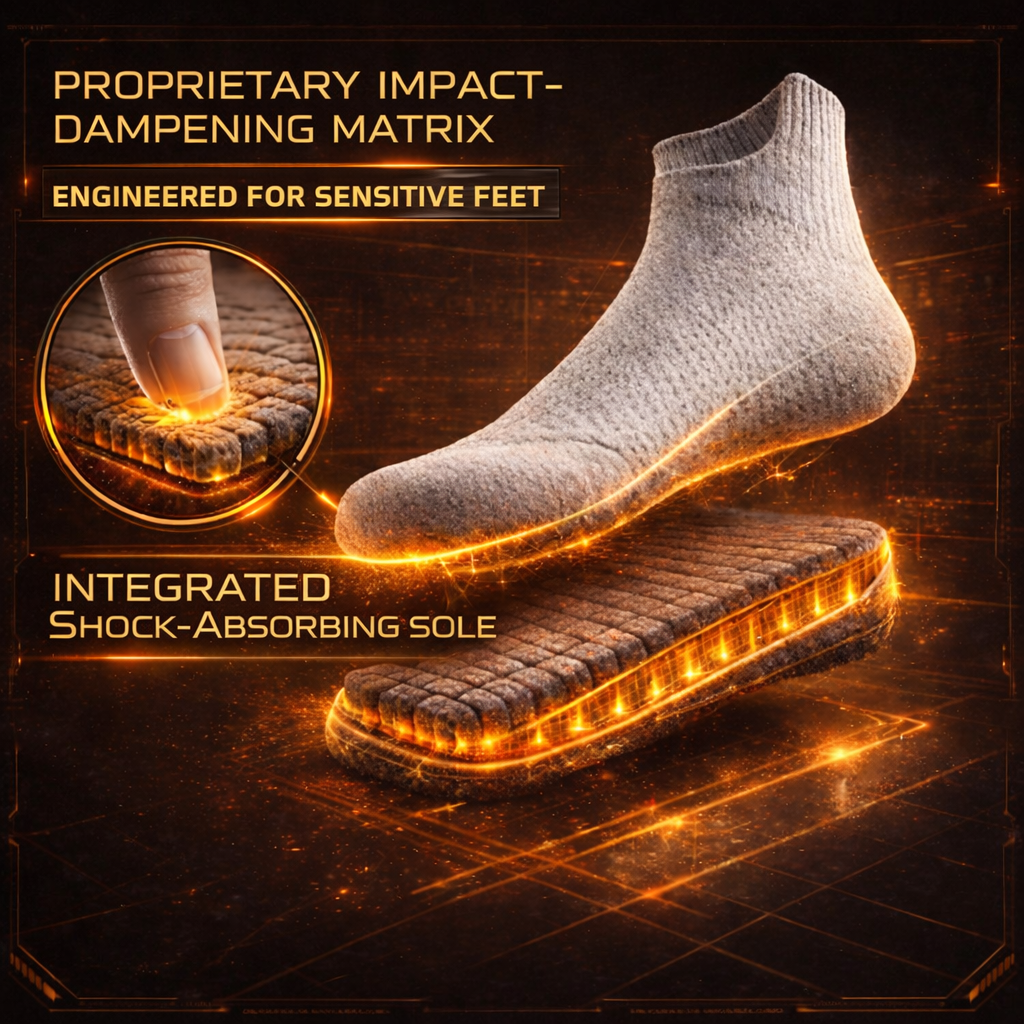
What Makes The Mechanism Different
This is the part I think many people misunderstand.
These are not just “thicker socks.”
That would not be enough.
The difference is the integrated sock-bottom structure.
PEWOX designed the bottom with a built-in embedded cushioning layer that sits directly in the sole area of the sock, creating a more protective underfoot contact zone.
So instead of relying on:
shoe foam alone
insole thickness alone
slipper softness alone
the sock itself contributes to the cushioning job.
That matters for three reasons:
1. The cushioning is closer to the foot
The buffering happens right where daily pressure is being felt.
2. The cushioning stays aligned
Because it is embedded into the sock bottom, it does not behave like a loose insert.
3. The benefit follows you
Work shoes, home slippers, indoor walking, daily standing—the cushioning goes with you.
That is a very different proposition than relying on a single shoe or removable insole to solve every environment.
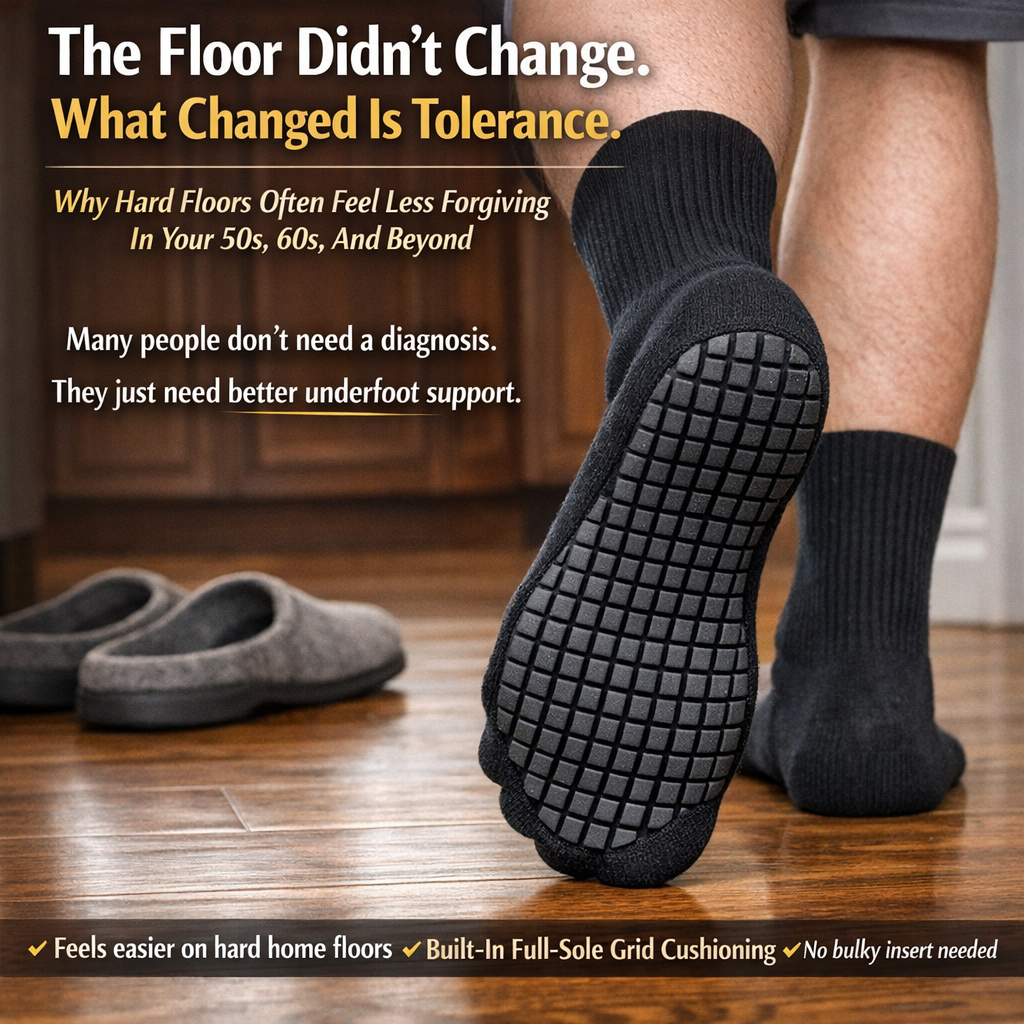
Why This May Matter More As We Age?
As we age, the floor often feels “harder,” even if the floor itself has not changed.
What changes is tolerance.
Many people in their 50s, 60s, and beyond begin noticing:
feet feel tired sooner
standing tolerance drops
hard floors feel more aggressive
end-of-day heaviness becomes more noticeable
home walking is no longer automatically comfortable
That does not always mean something dramatic is wrong.
Sometimes it means the feet simply no longer handle repetitive impact the way they used to.
That is why I think products like this are interesting.
They are not asking the body to “push through.”
They are changing the interface.
And when you improve the interface, you often improve the experience.
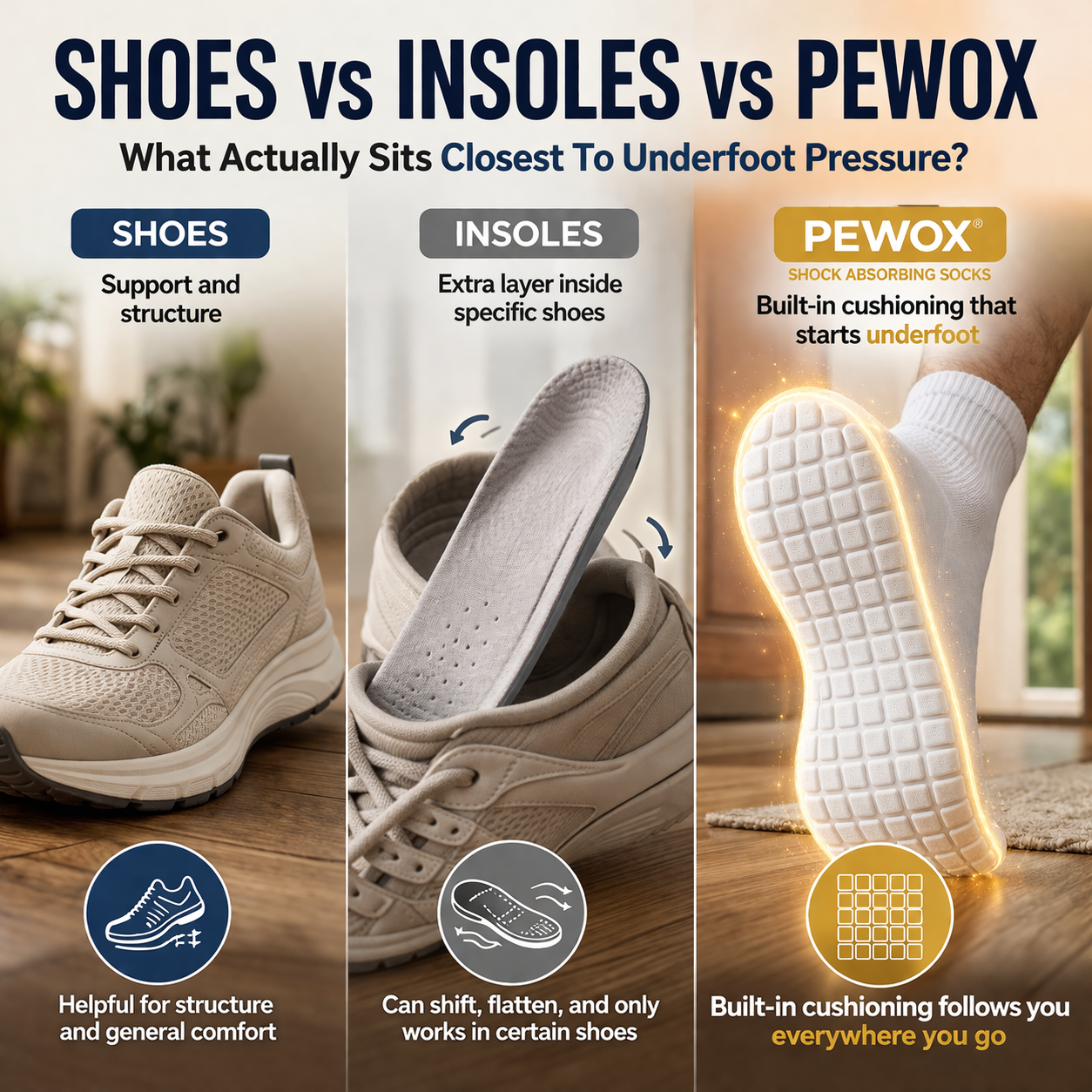
Shoes vs Insoles vs PEWOX
Here is the simplest comparison I would make after testing them:
Better Shoes
Helpful for structure and general comfort.
But shoes do not always solve repetitive underfoot pressure on their own.
Insoles
Can help some people, but they can shift, flatten, tighten shoe fit, and only work inside specific shoes.
PEWOX Shock Absorbing Socks
Offer a different approach by placing a built-in embedded cushioning layer directly into the sock bottom, so underfoot buffering begins earlier and follows the wearer across different environments.
That is the real distinction.
It is not necessarily “instead of all shoes forever.”
It is that the sock adds a missing layer that many people never realized they needed.
Who I Think These Are Best For?
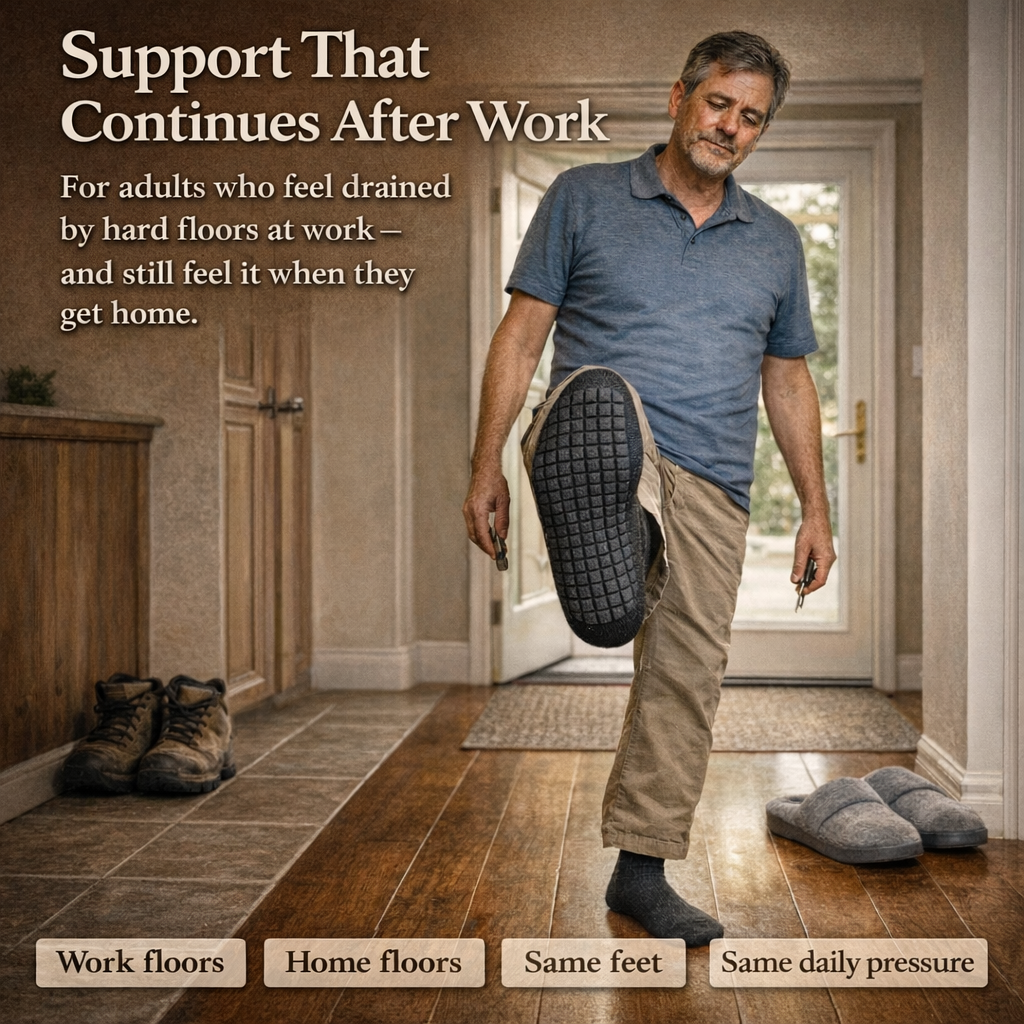
After testing them, I would say these are especially interesting for people who:
stand for long hours at work
feel drained by hard flooring
use kitchen tile or hardwood at home
have already tried better shoes with incomplete results
do not want a bulky insert changing shoe fit
want support that continues after work, not just during work
In other words, not just people searching for a diagnosis.
But ordinary adults who keep noticing the same quiet pattern:
“My feet are not handling daily life the way they used to.”
That is the real unawareness market.
They may not be searching for foot solutions yet.
They may still think they just need to “rest more,” “change shoes,” or “stop getting older.”
But often, the real issue is more mechanical than they realize.
My Honest Take
As someone trained to look at function, I found this product more compelling than I expected.
Not because it made outrageous promises.
But because the design itself addressed a real gap:
Most solutions begin with the shoe.
This one begins with the contact layer closest to the foot.
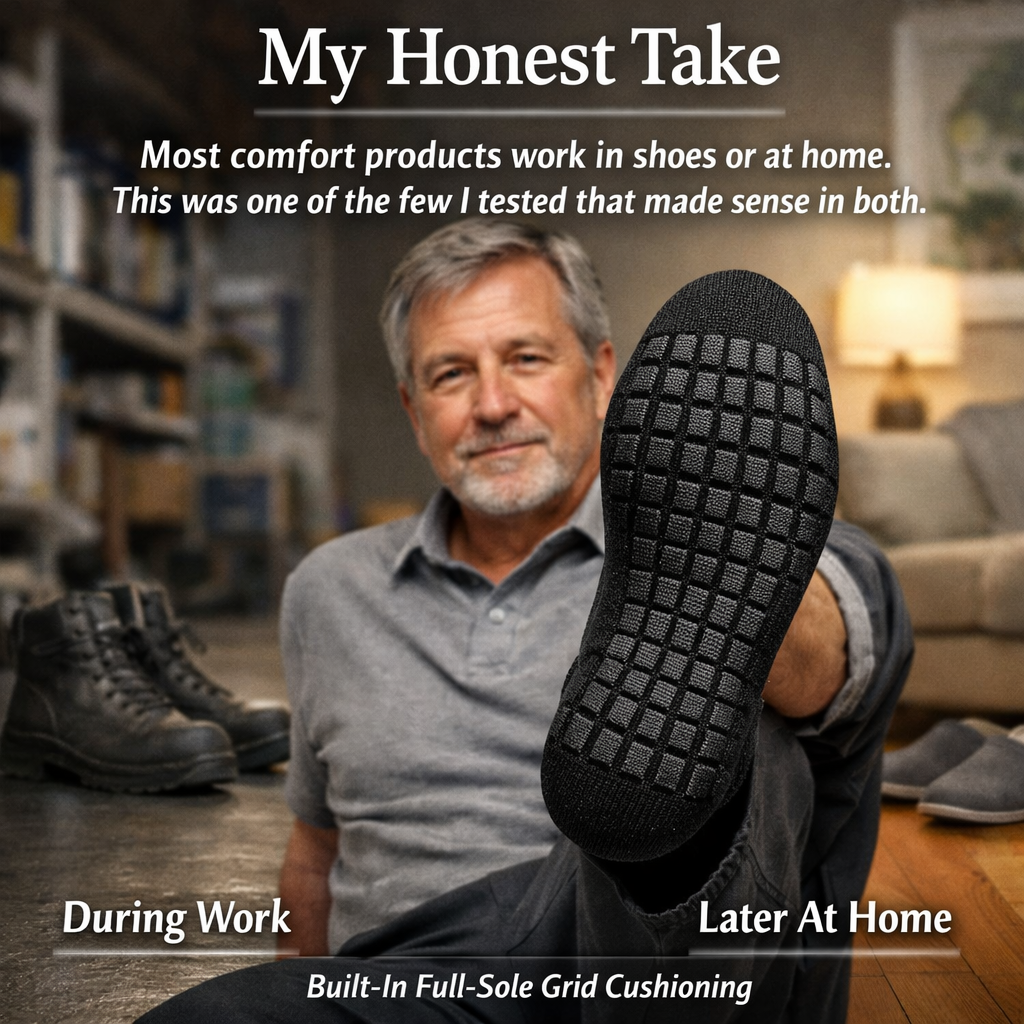
That is why it felt different in both settings I tested:
during work
and later at home
And that combination is rare.
Most comfort products are either “for shoes” or “for home.”
This was one of the few I tested that made sense in both.
Final Thought
If you have been assuming the next shoe is the answer…
Or the next slipper…
Or the next insole…
You may be solving the problem from too far away.
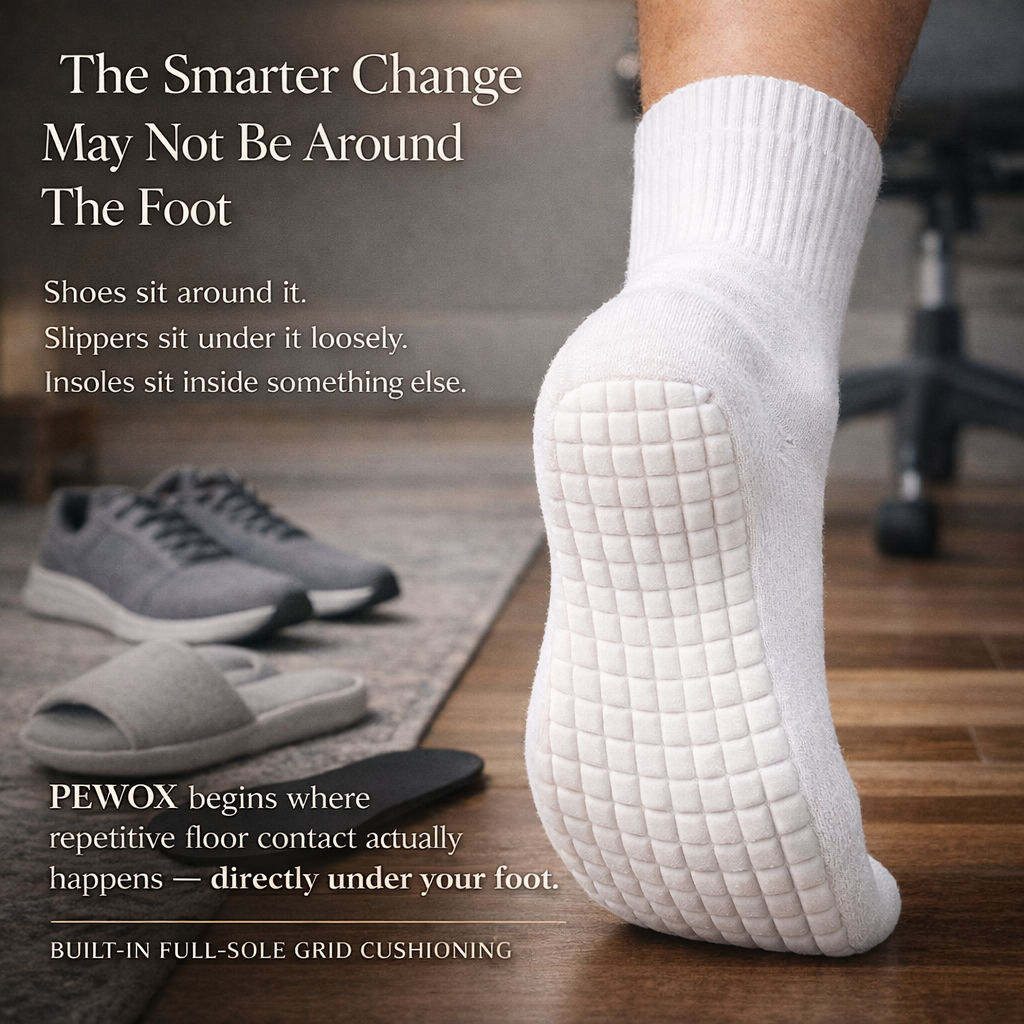
Sometimes the smarter change is not above or around the foot.
It is directly under it.
And that is exactly why I think PEWOX Shock Absorbing Socks are worth a closer look.
Because once the sock itself begins helping with repetitive floor contact, ordinary daily movement can start to feel easier again—in the places where most people actually live and work.
🍂 Brand Anniversary SALE: FREE Shipping + 30% OFF! 🍂
🍂 Brand Anniversary SALE: FREE Shipping + 30% OFF! 🍂

FREE GIFTS WITH YOUR ORDER
30% OFF FOR A LIMITED TIME ONLY!
This limited-time deal is in high demand and stock keeps selling out.
🧦 Includes thick Terry cushion sole for underfoot softness & shock protection.
Now Available in Two Classic Colors: White & Black
Sell-Out Risk: High
FREE shipping
Try it today with a 100-Day Money Back Guarantee!